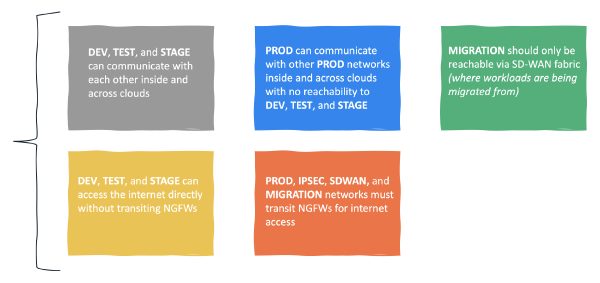
In Part 1, we laid out our foundation. In Part 2 and Part 3 we connected various networks (both cloud and on-premises) and provisioned NGFWs that scale to real-time capacity. By default, networks connected to our corporate segment have full-mesh connectivity to each other. Let’s build some policies in code that can work with the groups we created to produce logical micro-segmentation that mirror a few real-world use cases.
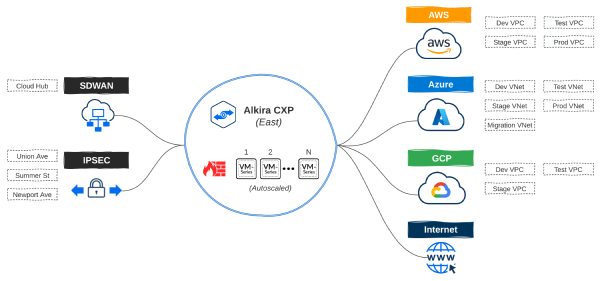
Check out Part 1 and Part 2 where we put together a scalable foundation and connect cloud networks from AWS, Azure, and GCP. For Part 3, we will bring on-premises back into the spotlight and connect some sites over Cisco SD-WAN and IPSEC.
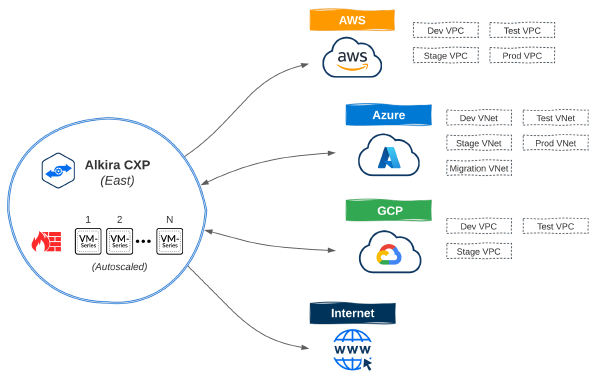
In Part 1, we started with a scalable foundation that can adapt over time as the business grows and adjusts to changing markets. With Alkira’s Network Cloud, we take a cloud native approach in enabling our customer’s transformation. No appliances need to be provisioned in remote VPCs or VNets, and no agents need to be installed on workloads. Getting started is as easy as kicking off a build pipeline. For Part 2, let’s connect some networks from AWS, Azure, and GCP.
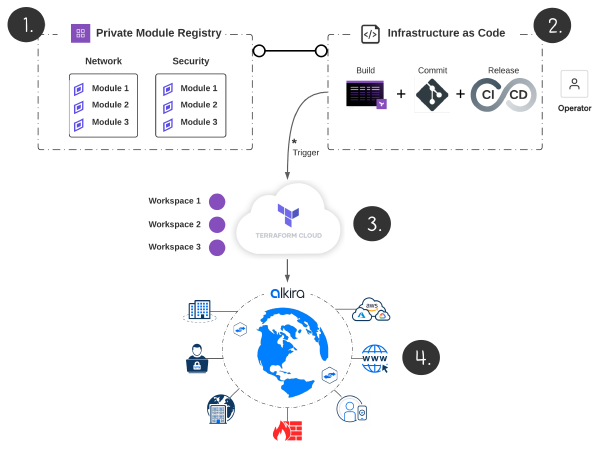
HashiCorp’s Terraform needs no introduction. It is all but the de facto vehicle for delivering cloud infrastructure, and for a good reason. What Terraform did for Multi-Cloud Infrastructure as Code, is precisely what Alkira does for the network. What happens when you use these two platforms together to deliver networking in and across clouds? If providing network services in code faster than ever before sounds interesting, this multi-part series is for you. Need a quick primer on Alkira? You can read up here.