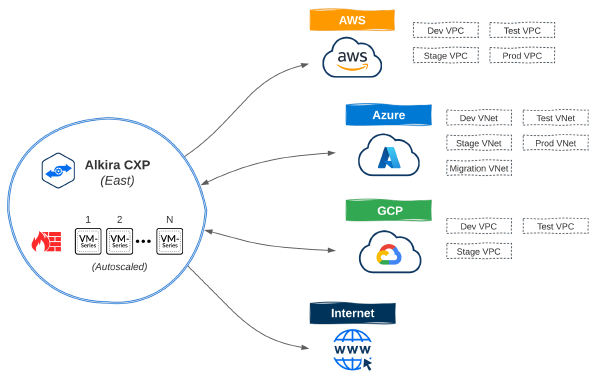
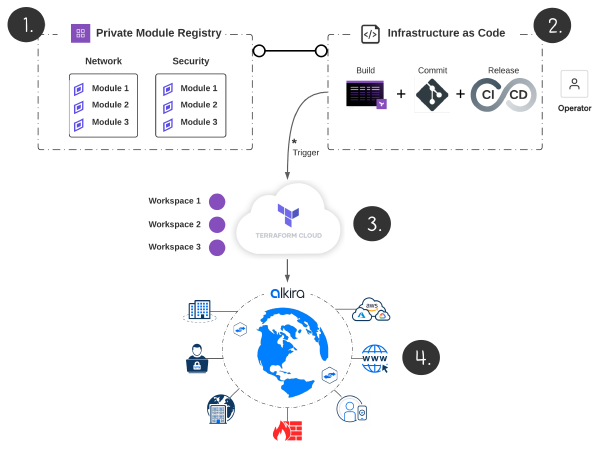
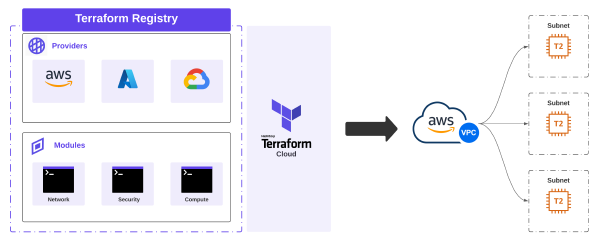
For many moons, importing existing infrastructure (that is to say, infrastructure running outside of Terraform state), has not been a trivial task. Historically, Terraform did not generate any configuration. You would have to write the infrastructure-as-code in a manner that reflects how it was deployed. Then, to make matters not easier, you would fetch the ‘ol shovel and dig out the unique resource identifiers to feed through the command line. Handling a single resource in this manner is pretty simple. Wrangling 20+ resources like this is not. Last month, Terraform v1.5.0 was released, offering the ability to use import blocks. Let’s test this new feature on my favorite infrastructure provider, Alkira.
What fits somewhere in between re:Invent and Community Day events? That would be the AWS Summits! This year, I got to experience a double dose of fun by representing Alkira at our booth and presenting at the AWS Community Developer Lounge. I may be biased, but I believe the Alkira team is the best in the world.
Usually, when it comes to technology, my grandmother doesn’t know much because she doesn’t care. What is the cloud? How to install a new browser on her laptop? What is 2FA? I might be speaking French to her as I discuss these things. Yet, she knows what ChatGPT is. This shows the vast amount of publicity, hype, and polarization that has ensued since November 2022. I tend to avoid AI fear-mongering and focus more on, how could a tool like this help enhance my daily grind? Can ChatGPT write Terraform as elegantly as a poem written from the perspective of Samuel L. Jackson in Pulp Fiction? Let’s take it for a spin on AWS using infrastructure-as-code.